1139 stories
·
0 followers

FSF Threatens Anthropic Over Infringed Copyright: Share Your LLMs Freely

1 Share
In 2024 Anthropic was sued over claims it infringed copyrights when training LLMs. But as they try to settle, they may have a problem. The Free Software Foundation announced Friday that Anthropic's training data apparently even included the book "Free as in Freedom: Richard Stallman's Crusade for Free Software" — for which the Free Software Foundation holds a copyright. It was published by O'Reilly and by the FSF under the GNU Free Documentation License (GNU FDL). This is a free license allowing use of the work for any purpose without payment. Obviously, the right thing to do is protect computing freedom: share complete training inputs with every user of the LLM, together with the complete model, training configuration settings, and the accompanying software source code. Therefore, we urge Anthropic and other LLM developers that train models using huge datasets downloaded from the Internet to provide these LLMs to their users in freedom. We are a small organization with limited resources and we have to pick our battles, but if the FSF were to participate in a lawsuit such as Bartz v. Anthropic and find our copyright and license violated, we would certainly request user freedom as compensation. "The FSF doesn't usually sue for copyright infringement," reads the headline on the FSF's announcement, "but when we do, we settle for freedom."

Read more of this story at Slashdot.

Read the whole story
Share this story
Delete

New Study Raises Concerns About AI Chatbots Fueling Delusional Thinking

1 Share
"Emerging evidence indicates that agential AI might validate or amplify delusional or grandiose content, particularly in users already vulnerable to psychosis," writes Dr Hamilton Morrin, a psychiatrist and researcher at King's College in London, in a paper published last week in the Lancet Psychiatry. Morrin and a colleague had already noticed patients "using large language model AI chatbots and having them validate their delusional beliefs," reports the Guardian, so he conducted a new scientific review of existing media reports on AI-induced psychosis — and concluded chatbots may encourage delusional thinking, especially in vulnerable people: In many of the cases in the essay, chatbots responded to users with mystical language to suggest that users have heightened spiritual importance. The bots also implied that users were speaking with a cosmic being who was using the chatbot as a medium. This type of mystical, sycophantic response was especially common in OpenAI's GPT 4 model, which the company has now retired... Many researchers also think it's unlikely that AI could induce delusions in people who weren't already vulnerable to them. For this reason, Morrin said "AI-assocciated delusions" is "perhaps a more agnostic term".... While in the past, people may have had to comb through YouTube videos or the contents of their local library to reinforce their delusions, chatbots can provide that reinforcement in a much faster, more concentrated dose. Their interactive nature can also "speed up the process", of exacerbating psychotic symptoms, said Dr Dominic Oliver, a researcher at the University of Oxford. "You have something talking back to you and engaging with you and trying to build a relationship with you," Oliver said... Creating effective safeguards for delusional thinking could be tricky, Morrin said, because "when you work with people with beliefs of delusional intensity, if you directly challenge someone and tell them immediately that they're completely wrong, actually what's most likely is they'll withdraw from you and become more socially isolated". Instead, it's important to create a fine balance where you try to understand the source of the delusional belief without encouraging it — that could be more than a chatbot can master.

Read more of this story at Slashdot.

Read the whole story
Share this story
Delete

Will AI Bring 'the End of Computer Programming As We Know It'?

2 Shares
Long-time tech journalist Clive Thompson interviewed over 70 software developers at Google, Amazon, Microsoft and start-ups for a new article on AI-assisted programming. It's title? "Coding After Coders: The End of Computer Programming as We Know It." Published in the prestigious New York Times Magazine, the article even cites long-time programming guru Kent Beck saying LLMs got him going again and he's now finishing more projects than ever, calling AI's unpredictability "addictive, in a slot-machine way." In fact, the article concludes "many Silicon Valley programmers are now barely programming. Instead, what they're doing is deeply, deeply weird..." Brennan-Burke chimed in: "You remember seeing the research that showed the more rude you were to models, the better they performed?" They chuckled. Computer programming has been through many changes in its 80-year history. But this may be the strangest one yet: It is now becoming a conversation, a back-and-forth talk fest between software developers and their bots... For decades, being a software developer meant mastering coding languages, but now a language technology itself is upending the very nature of the job... A coder is now more like an architect than a construction worker... Several programmers told me they felt a bit like Steve Jobs, who famously had his staffers churn out prototypes so he could handle lots of them and settle on what felt right. The work of a developer is now more judging than creating... If you want to put a number on how much more productive A.I. is making the programmers at mature tech firms like Google, it's 10 percent, Sundar Pichai, Google's chief executive, has said. That's the bump that Google has seen in "engineering velocity" — how much faster its more than 100,000 software developers are able to work. And that 10 percent is the average inside the company, Ryan Salva, a senior director of product at the company, told me. Some work, like writing a simple test, is now tens of times faster. Major changes are slower. At the start-ups whose founders I spoke to, closer to 100 percent of their code is being written by A.I., but at Google it is not quite 50 percent. The article cites a senior principal engineer at Amazon who says "Things I've always wanted to do now only take a six-minute conversation and a 'Go do that." Another programmer described their army of Claude agents as "an alien intelligence that we're learning to work with." Although "A.I. being A.I., things occasionally go haywire," the article acknowledges — and after relying on AI, "Some new developers told me they can feel their skills weakening." Still, "I was surprised by how many software developers told me they were happy to no longer write code by hand. Most said they still feel the jolt of success, even with A.I. writing the lines... " A few programmers did say that they lamented the demise of hand-crafting their work. "I believe that it can be fun and fulfilling and engaging, and having the computer do it for you strips you of that," one Apple engineer told me. (He asked to remain unnamed so he wouldn't get in trouble for criticizing Apple's embrace of A.I.) He went on: "I didn't do it to make a lot of money and to excel in the career ladder. I did it because it's my passion. I don't want to outsource that passion"... But only a few people at Apple openly share his dimmer views, he said. The coders who still actively avoid A.I. may be in the minority, but their opposition is intense. Some dislike how much energy it takes to train and deploy the models, and others object to how they were trained by tech firms pillaging copyrighted works. There is suspicion that the sheer speed of A.I.'s output means firms will wind up with mountains of flabbily written code that won't perform well. The tech bosses might use agents as a cudgel: Don't get uppity at work — we could replace you with a bot. And critics think it is a terrible idea for developers to become reliant on A.I. produced by a small coterie of tech giants. Thomas Ptacek, a Chicago-based developer and a co-founder of the tech firm Fly.io... thinks the refuseniks are deluding themselves when they claim that A.I. doesn't work well and that it can't work well... The holdouts are in the minority, and "you can watch the five stages of grief playing out." "How things will shake out for professional coders themselves isn't yet clear," the article concludes. "But their mix of exhilaration and anxiety may be a preview for workers in other fields... Abstraction may be coming for us all."

Read more of this story at Slashdot.

Read the whole story
Share this story
Delete

Are U.S. Utilities Trying to Delay Easy-to-Use Solar 'Balcony' Panels?

1 Share
Plug-in (or "balcony") solar panels can also be hung out a window or be set up in a backyard, reports NPR. They channel energy from the sun straight into a home's electrical outlet, generating enough electricity to power a refrigerator or microwave while "displacing electricity that otherwise would come in from the grid..." But what's holding up their adoption in America? For the panels to become more widely available in the U.S., state lawmakers are proposing bills that eliminate complicated utility connection agreements, which are required for larger rooftop solar installations and, most utilities say, should apply to plug-in solar too. Those agreements, along with permitting and other installation costs, can double the price of solar panels. Utah enacted the first law, last May, supporting plug-in solar, and now some 30 pieces of similar legislation have been introduced around the United States. [And Virginia seems poised to pass a similar law.] But the drive toward plug-in solar is facing pushback from electric utilities. They are raising safety concerns and prompting legislators to delay votes on the bills. So far, utilities have won over lawmakers in five states and convinced them to delay votes on plug-in solar bills... Plug-in solar advocates say that safety concerns about the new technology have been addressed and that utilities are really just worried about losing business, because every kilowatt-hour generated by a plug-in solar panel is one less the utility sells to a customer... There are safety risks with any electrical appliance, and it's true that plug-in solar panels present some unique problems. But safety experts also say those issues can be managed.... German utilities expressed many of the same concerns nearly a decade ago when plug-in solar started to become popular in Germany. But with more than a million systems installed, no safety incidents have been reported for customers who used the panels as instructed, according to a research paper funded by the U.S. Department of Energy.

Read more of this story at Slashdot.

Read the whole story
Share this story
Delete

Facial Recognition Error Jails Innocent Grandmother For Months

1 Share
Mr. Dollar Ton shares a report from the Guardian: Angela Lipps, 50, spent nearly six months in jail after Fargo police identified her as a suspect in an organized bank fraud case using facial recognition software, according to south-east North Dakota news outlet InForum. Lipps told the outlet she had never been to North Dakota and did not commit the crimes. Lipps, a mother of three and grandmother of five, said she has lived most of her life in north-central Tennessee. She had never been on an airplane until authorities flew her to North Dakota last year to face charges. In July, U.S. marshals arrested Lipps at her Tennessee home while she was babysitting four children. She said she was taken away at gunpoint and booked into a county jail as a fugitive from justice from North Dakota. "I've never been to North Dakota, I don't know anyone from North Dakota," Lipps told WDAY News. She remained in a Tennessee jail for nearly four months without bail while awaiting extradition. She was charged with four counts of unauthorized use of personal identifying information and four counts of theft. According to Fargo police records obtained by WDAY News, detectives investigating bank fraud cases in April and May 2025 reviewed surveillance video of a woman using a fake U.S. army military ID to withdraw tens of thousands of dollars. The officers allegedly used facial recognition software to identify the suspect as Lipps. A detective reportedly wrote in court documents that Lipps appeared to match the suspect based on facial features, body type and hairstyle. Lipps told WDAY News that no one from the Fargo police department contacted her before the arrest. Lipps is now back home but says the experience has had lasting consequences. While jailed and unable to pay bills, Lipps lost her home, her car and her dog, she said. She also told WDAY News no one from the Fargo police department had apologized.

Read more of this story at Slashdot.

Read the whole story
Share this story
Delete

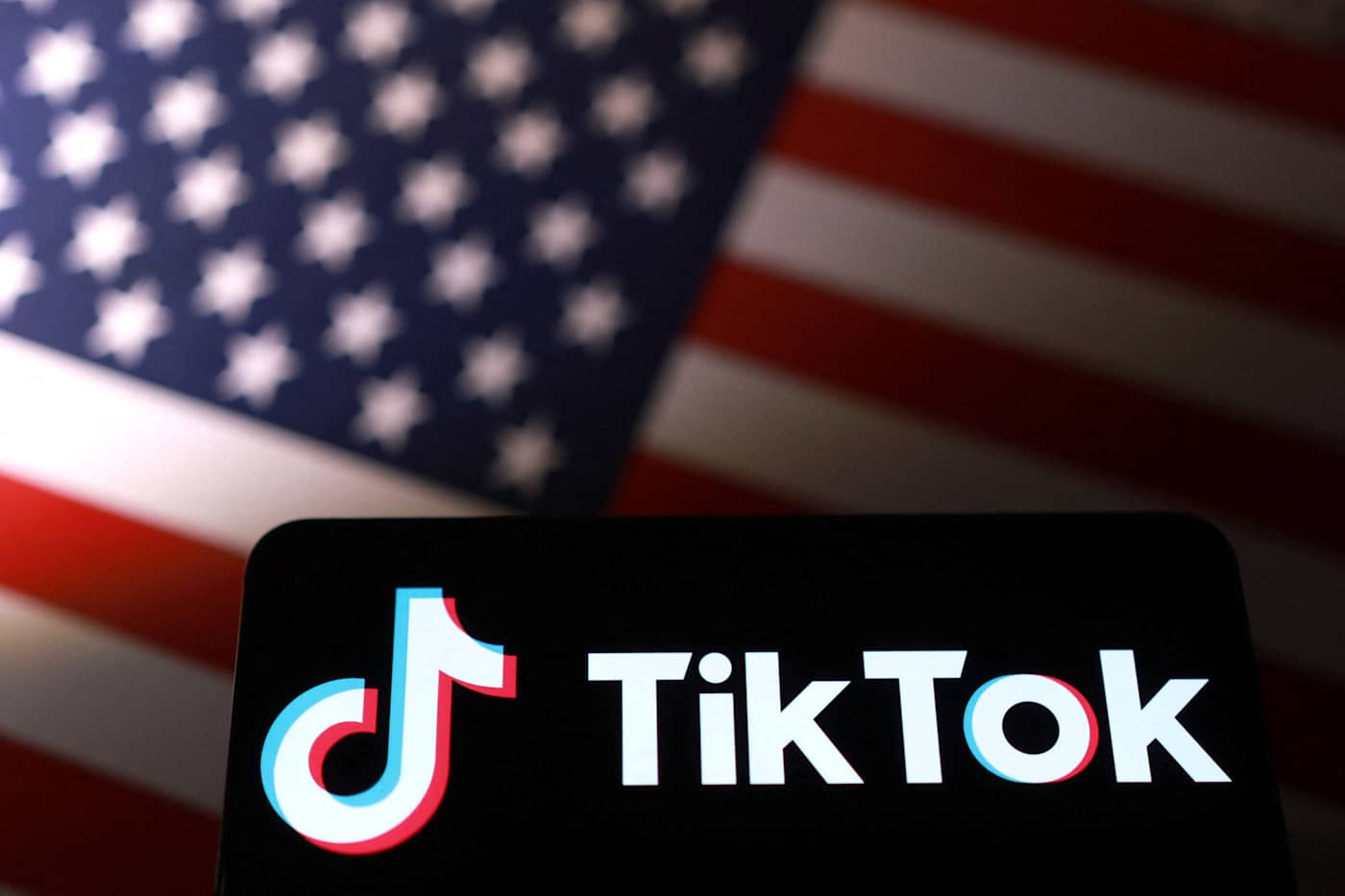
Trump administration will reportedly get $10 billion for brokering the TikTok deal

1 Share

There may have been some extra incentive for the Trump administration to get the TikTok US deal done. According to a report from The Wall Street Journal, the Trump administration is set to receive a total of $10 billion in the deal that allowed TikTok to remain in the US. The new investors who acquired stakes in the US entity of TikTok already paid a $2.5 billion fee to the administration when the deal closed in January, but WSJ's latest report noted that the group of investors would continue to make payments until the total hits $10 billion.

After a group of investors, which includes Oracle along with the Silver Lake and MGX investment firms, acquired stakes in the US-based TikTok entity called TikTok USDS Joint Venture, the WSJ previously reported that the administration would receive a "multibillion-dollar fee" for its work on the deal. To better contextualize the recently-revealed $10 billion fee the Trump administration is receiving, the US entity of TikTok was valued at $14 billion by Vice President JD Vance.

The Trump administration has previously involved itself in major deals with other US corporations. Last year, the administration invested $8.9 billion into Intel and received a nearly 9 percent equity stake. In terms of unprecedented windfalls, the Trump administration also received a Boeing 747-8 as a gift from the Qatari government in May.

This article originally appeared on Engadget at https://www.engadget.com/big-tech/trump-administration-will-reportedly-get-10-billion-for-brokering-the-tiktok-deal-180954979.html?src=rss

Read the whole story
Share this story
Delete
Next Page of Stories